Technology has always been the driving force behind innovation and change, but as we step deeper into 2025 the pace of transformation is accelerating like never before. Businesses, governments, and individuals are adapting to new realities shaped by artificial intelligence, automation, digital ecosystems, and advanced computing. Understanding the most impactful technology trends is no longer optional, it is essential for staying ahead in a world where digital disruption is the new normal.
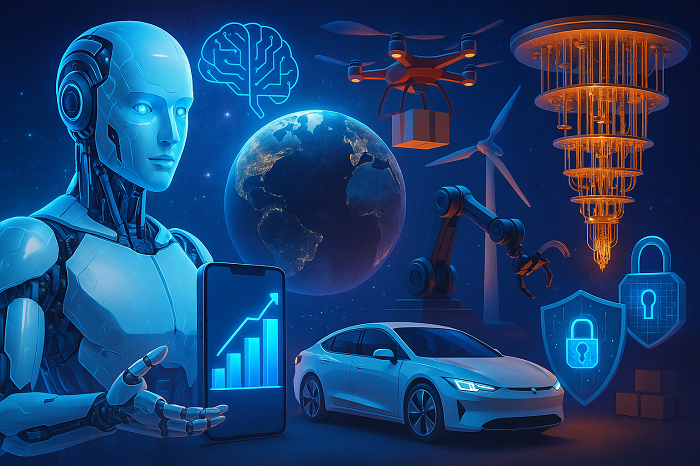
This article explores the top 10 tech trends shaping the future in 2025, offering deep insights into how they are influencing industries, improving lives, and creating new opportunities for growth. From artificial intelligence to quantum computing, these trends represent the foundation of tomorrow’s digital world.
1. Artificial Intelligence Becoming Smarter and More Accessible
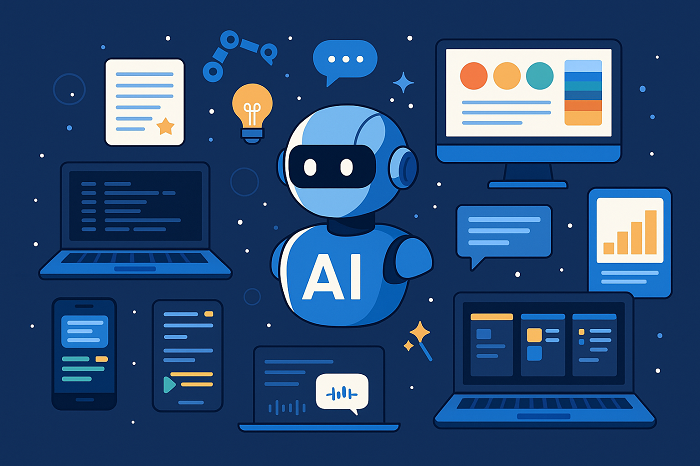
Artificial intelligence continues to be the cornerstone of digital progress. In 2025 AI is no longer confined to research labs or elite corporations, it is embedded in daily life and business operations. From personalized healthcare recommendations to AI-driven business automation, its applications are limitless. The rise of generative AI has transformed content creation, software development, and customer service, reducing workloads and enabling smarter decision-making. Accessibility has improved significantly, as even small businesses and individuals now harness AI tools to streamline workflows and stay competitive.
2. Quantum Computing Moving from Theory to Reality
Quantum computing has long been a buzzword in the tech space, but in 2025 we are witnessing practical breakthroughs. Tech giants and startups alike are making quantum systems more stable and scalable. These machines, capable of solving problems beyond the reach of classical computers, are revolutionizing fields like drug discovery, cryptography, logistics optimization, and financial modeling. While still not mainstream, quantum computing is becoming a critical tool for industries that rely on solving complex problems faster than ever before.
3. The Growth of 5G and Emergence of 6G
Connectivity is the backbone of innovation. By 2025, 5G has become standard across major cities and industries, enabling faster internet speeds, reliable real-time communication, and expanded IoT ecosystems. However, attention is already shifting toward 6G development, which promises ultra-low latency, speeds up to 100 times faster than 5G, and transformative applications such as holographic communication and fully immersive virtual environments. These advancements will redefine how we interact, collaborate, and consume digital content.
4. Expansion of the Internet of Things (IoT)
IoT has moved far beyond smart home gadgets and fitness trackers. In 2025, billions of interconnected devices are shaping smarter cities, efficient industries, and personalized experiences. From autonomous vehicles to connected healthcare systems, IoT creates a seamless exchange of information between machines and humans. With improved sensors, stronger networks, and enhanced security, IoT is driving industries toward predictive maintenance, energy efficiency, and improved safety. The growing ecosystem also supports sustainability initiatives by reducing waste and optimizing resource usage.
5. Cybersecurity Powered by AI and Zero-Trust Models
As technology evolves, so do threats. In 2025 cybersecurity is one of the most pressing concerns across the globe. The rise in ransomware attacks, phishing schemes, and deepfake-driven scams has forced companies to adopt advanced AI-powered security systems. The zero-trust model, which assumes no device or user can be trusted by default, has become a standard approach. Governments are implementing stricter regulations to safeguard data, while businesses invest heavily in proactive security measures. Cybersecurity is no longer an IT responsibility alone, it is a critical part of corporate strategy.
6. Augmented Reality and Virtual Reality Transforming Experiences
AR and VR technologies have matured beyond gaming and entertainment. In 2025 they are redefining industries such as education, real estate, retail, and healthcare. Students attend immersive classrooms, buyers explore virtual stores, and doctors perform remote surgeries with AR guidance. Businesses are leveraging these tools for employee training, creating realistic simulations that improve skill development and reduce costs. The integration of AR and VR with AI is unlocking experiences that feel more natural, interactive, and engaging than ever before.
7. Rise of Autonomous Systems and Robotics
Automation is no longer limited to factory floors. In 2025 autonomous systems are transforming logistics, agriculture, and healthcare. Drones deliver goods to remote areas, robots assist in elderly care, and self-driving vehicles reduce accidents and traffic congestion. Enhanced robotics combined with AI learning capabilities make machines smarter, more adaptable, and capable of handling complex tasks. These systems are not only increasing efficiency but also reshaping labor markets, raising questions about the balance between technology and human employment.
8. Blockchain Beyond Cryptocurrencies
Blockchain technology has outgrown its early association with cryptocurrencies. By 2025 blockchain is widely adopted across supply chains, financial services, real estate, and even government operations. Its ability to provide transparency, traceability, and security makes it invaluable for industries requiring trust and accountability. Smart contracts are automating business processes, while decentralized finance (DeFi) platforms are giving users greater control over their financial assets. Blockchain is steadily becoming the backbone of digital trust in an interconnected world.
9. Green Technology and Sustainable Innovation
Sustainability is no longer a trend but a necessity. By 2025 green technology is reshaping industries to meet global climate goals. Companies are investing in renewable energy solutions, electric mobility, and smart grids to reduce carbon footprints. Innovations in energy storage, biodegradable materials, and waste reduction technologies are making sustainability more practical and affordable. Governments and businesses are aligning their strategies to adopt eco-friendly practices, as consumers increasingly prefer sustainable brands and products.
10. Human Augmentation and Biotech Integration
One of the most fascinating tech trends in 2025 is the merging of biology and technology. Human augmentation, powered by biotechnology and advanced wearables, is enhancing physical and cognitive abilities. From prosthetics with AI-driven movement to brain-computer interfaces enabling direct interaction with machines, the boundaries between human and machine are blurring. In healthcare, gene editing and personalized treatments are improving patient outcomes, while biotech innovations are addressing food security and medical challenges on a global scale.
Conclusion
The year 2025 represents a defining moment in the evolution of technology. These top 10 trends, from artificial intelligence to biotechnology, are shaping a future that is more connected, efficient, and innovative than ever before. While opportunities are vast, challenges such as cybersecurity, ethical concerns, and workforce adaptation must be addressed responsibly. For businesses and individuals, staying informed about these trends is the key to thriving in a rapidly changing digital landscape. By embracing innovation and adopting forward-looking strategies, the world can harness technology not only for growth but also for a more sustainable and inclusive future.
Frequently Asked Questions (FAQs)
Q1. What is the most influential tech trend in 2025?
Answer. Artificial intelligence remains the most influential trend due to its widespread impact across industries including healthcare, business, education, and entertainment.
Q2. How will 6G change everyday life compared to 5G?
Answer. 6G will offer significantly faster speeds and lower latency, enabling immersive technologies like holographic communication, real-time AI processing, and advanced virtual collaboration.
Q3. Why is cybersecurity more important than ever in 2025?
Answer. With increasing digital adoption, cyber threats have become more sophisticated. Businesses and individuals must prioritize advanced security solutions to protect sensitive data and maintain trust.
Q4. Is blockchain only useful for cryptocurrencies?
Answer. No, blockchain is now widely used in supply chain management, digital identity verification, smart contracts, and secure financial transactions beyond cryptocurrencies.
Q5. How does technology contribute to sustainability?
Answer. Green technologies like renewable energy, electric vehicles, and smart resource management systems are helping reduce carbon emissions and support global environmental goals.